If you’re new to hydroponics, lettuce is the perfect plant to start with. It grows fast, tolerates beginner mistakes, and you can harvest fresh leaves in as little as three to four weeks. In this guide, I’ll walk you through everything you need to know — from picking the right variety to choosing the best system and harvesting your first crisp leaves.
Why Lettuce Is the Best Plant to Start With
Lettuce thrives in cool, nutrient-rich water with moderate light. Unlike fruiting plants such as tomatoes or peppers, it doesn’t require pollination, intense lighting, or weeks of patience. A single lettuce plant can produce harvestable leaves in under a month, and many varieties keep producing if you harvest the outer leaves and leave the center to regrow.
It also has a forgiving pH and EC range, which makes it ideal while you’re still learning to dial in your system.
Best System for Growing Hydroponic Lettuce: NFT
While lettuce can be grown in almost any hydroponic system, Nutrient Film Technique (NFT) is the best method for lettuce — and it’s what we recommend for a dedicated lettuce setup.
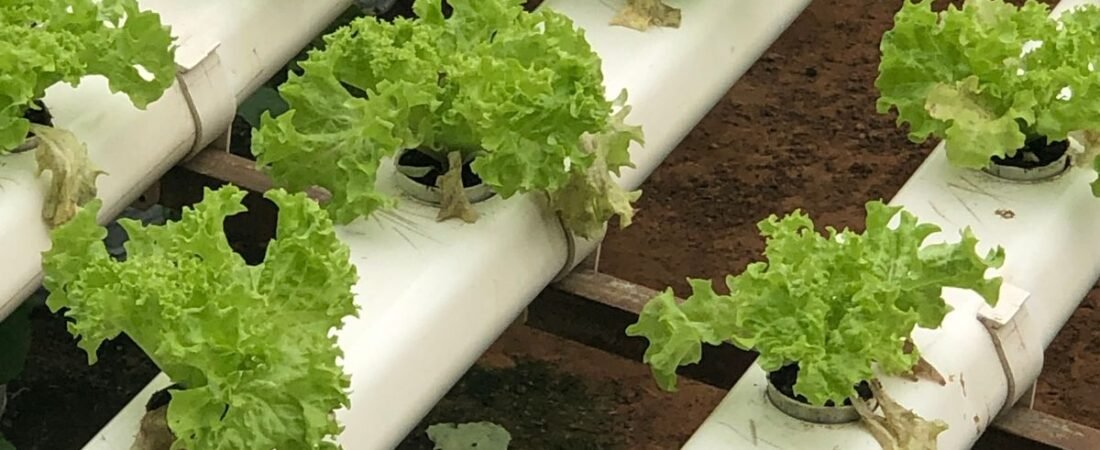
In an NFT system, a thin film of nutrient solution flows continuously along a shallow channel, passing over the roots before draining back into the reservoir. The roots sit in net cups at the top of the channel — the bottom of the roots are always wet, while the upper portion gets oxygen from the air. This combination of constant nutrition and excellent root oxygenation is exactly what lettuce loves.
Why NFT Works So Well for Lettuce
- Fast growth — constant nutrient flow accelerates leaf production
- Great root oxygenation — roots stay moist but never waterlogged
- Low water use — recirculates the same reservoir, wasting very little
- Scalable — easy to run multiple channels for a larger harvest
- Clean and tidy — no growing media needed in most setups
We’re putting together a full NFT lettuce setup guide — including channel sizing, pump selection, and spacing — which will be published alongside our upcoming video. Stay tuned.
Can You Use Other Systems?
Yes — lettuce is flexible. If you’re just starting out and already have a Kratky or DWC setup, lettuce will do well in those too. Kratky is especially popular for lettuce because it’s completely passive — no pump, no electricity, minimal maintenance. DWC gives faster growth but requires an air pump and more attention to reservoir management.
For a dedicated lettuce and leafy greens operation though, NFT is hard to beat.
Best Lettuce Varieties to Grow Hydroponically
- Butterhead (Bibb, Boston): tender, buttery leaves — the gold standard for hydroponic lettuce
- Loose-leaf (Green/Red Oak, Salad Bowl): ready to harvest in 21–28 days, perfect for cut-and-come-again harvesting
- Romaine: crisp, upright, slower to bolt — great for Caesar salads
- Summer Crisp (Batavia): heat tolerant if your grow space runs warm
For beginners, loose-leaf varieties are the best choice — they grow the fastest and let you harvest continuously rather than waiting for a full head.
Ideal Growing Conditions for Hydroponic Lettuce
- pH: 5.5–6.2 (keep it on the lower end of the hydroponic range)
- EC: 0.8–1.6 mS/cm (lettuce prefers a lighter nutrient solution)
- Temperature: 60–70°F (15–21°C) — lettuce is a cool-weather crop
- Light: 14–16 hours of light per day; 200–400 PPFD is sufficient
- Water temperature: 65–72°F to avoid root rot and slow growth
Lettuce is more sensitive to heat than most crops. If your grow space is warm, choose a heat-tolerant variety and keep your reservoir cool.
What Nutrients to Use
For lettuce, a general-purpose hydroponic nutrient formula works well. We recommend either Humboldt’s Secret Base A & B (beginner-friendly liquid option) or Masterblend 4-18-38 (better long-term value). Both will grow excellent lettuce. See our full comparison: Masterblend vs. Humboldt’s Secret — True Cost Breakdown.
Harvesting Your Lettuce
Loose-leaf varieties are ready to harvest in 21–35 days from transplant. You have two options: harvest outer leaves continuously (cut-and-come-again), or pull the whole plant at once. Cut-and-come-again gives you a longer harvest window and more total yield per plant — just cut leaves 1–2 inches above the crown and let the center keep growing.
Romaine and butterhead varieties are typically harvested all at once when the head is full, usually around 45–60 days.
Common Problems and How to Fix Them
- Tip burn (brown leaf edges): caused by calcium deficiency or poor airflow. Increase circulation and check your EC isn’t too high.
- Bolting (plant goes to flower/seed too early): caused by heat or too much light. Lower temperatures or switch to a bolt-resistant variety.
- Yellowing leaves: usually a pH or nutrient issue. Check your pH first — it should be 5.5–6.2.
- Slimy roots: root rot from warm water or poor oxygenation. Keep water below 72°F and ensure good airflow around roots.
Related guides: NFT System Guide | Kratky Method Guide | Deep Water Culture (DWC) Guide | How to Check and Adjust pH | Best Hydroponic Nutrients