Affiliate disclosure: This page contains affiliate links. As an Amazon Associate, we earn from qualifying purchases at no additional cost to you. Read our full disclosure.
Deep Water Culture (DWC) Hydroponics
Deep Water Culture (DWC) is one of the most popular and effective hydroponic growing methods for home growers. In DWC, plant roots are suspended directly in a highly oxygenated, nutrient-rich water solution — delivering faster growth, bigger yields, and healthier plants than traditional soil gardening. Best of all, you can set up a basic DWC system at home with minimal equipment and space.
Our Recommended DWC Starter Kits
Short on time? These three Amazon picks cover the most common DWC scenarios for home growers. Each one is a complete or near-complete kit, so you can be growing within a weekend.
VIVOSUN 4-Bucket DWC Grow System
Complete 5-gallon kit with air pump, air stone, and top-drip — everything you need to start, in one box.
- 4 dark-colored buckets prevent algae
- Recirculating drip keeps roots oxygenated
- Scales to multiple plants
AeroGarden Bounty Basic
A countertop, fully automated system — perfect if you want to skip the DIY assembly and just plant.
- Built-in LED grow light included
- Automatic timer and reminders
- Grows up to 9 plants at once
Ahopegarden 10-Pod Hydroponic System
The cheapest way to try indoor hydroponics — a complete countertop kit with grow light under $60.
- 10 growing stations
- Full-spectrum LED light included
- Quiet pump & water-level window
As an Amazon Associate we earn from qualifying purchases.
How Does Deep Water Culture Work?

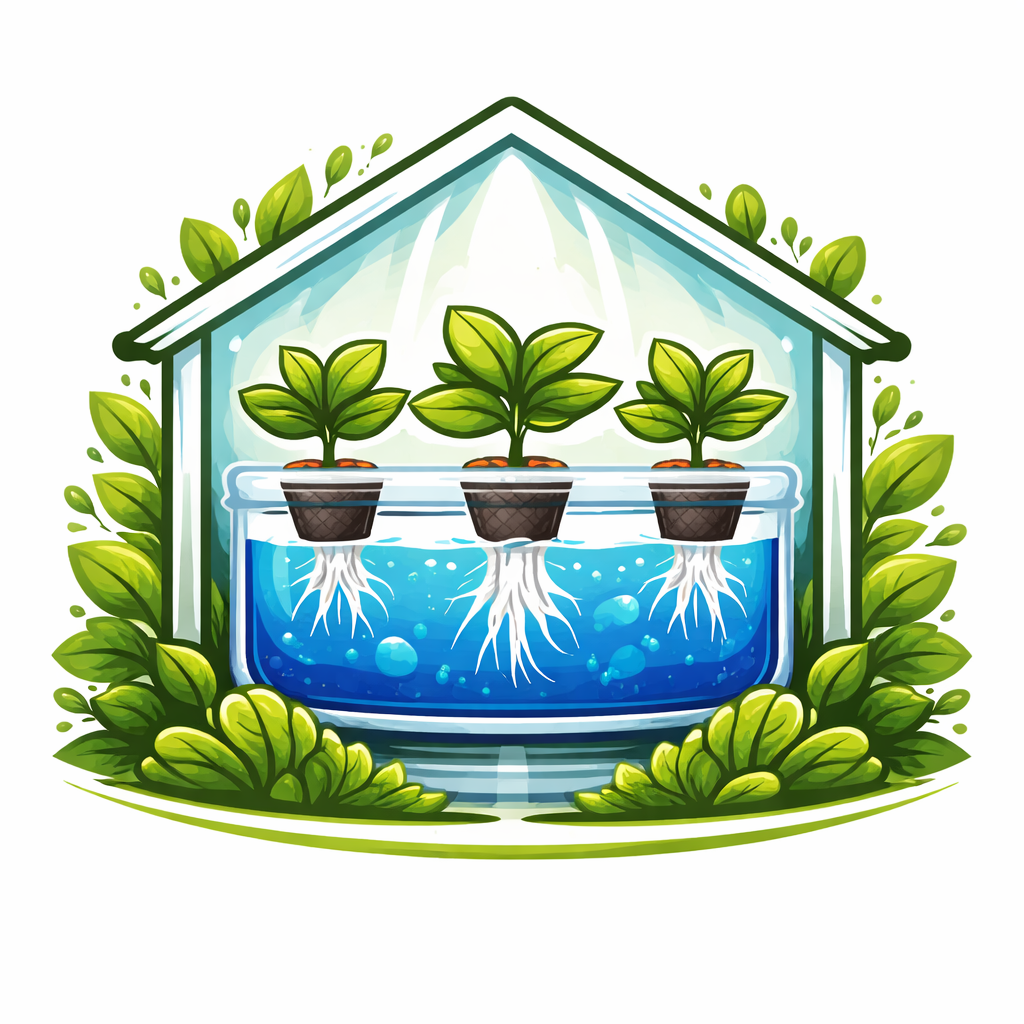
In a DWC system, plants are placed in net pots filled with an inert growing medium (like clay pebbles or rockwool). These net pots sit in holes cut into the top of a reservoir filled with water and nutrients.
An air pump and air stone constantly bubble oxygen into the water, ensuring the plant roots never suffocate. The roots hang directly into the nutrient solution, absorbing water, nutrients, and oxygen simultaneously — allowing for remarkable growth rates. Most home DWC setups also have a small air gap between the water surface and the net pot bottom, so roots can access both oxygen from the air and nutrients from the water.
What You Need to Get Started
Setting up your first DWC system doesn’t require expensive equipment. Here’s a basic shopping list to get started:
- Reservoir/Bucket — A 5-gallon bucket per plant, or a larger tote for multiple plants. Dark-colored containers prevent algae growth.
- Net Pots — Small mesh cups (usually 2-3 inch) that hold your plants and growing medium above the water.
- Air Pump & Air Stone — Keeps the water oxygenated so roots don’t drown. A simple aquarium air pump works well.
- Grow Lights — Full-spectrum LED grow lights are energy-efficient and ideal for indoor growing.
- Hydroponic Nutrients — A two or three-part nutrient formula designed for hydroponics. We recommend a liquid A&B nutrient for beginners, or a dry MasterBlend kit if you want better value for larger grows.
- pH Meter & pH Adjustment Kit — Keeping the pH between 5.5 and 6.5 is critical for nutrient uptake.
- Growing Medium — Clay pebbles (LECA), rockwool, or hydroton to support roots in the net pot.
- Seeds or Clones — Start with fast-growing, beginner-friendly plants like lettuce, basil, or spinach.
Best Plants to Grow with DWC
DWC is incredibly versatile. Here are the best plants for beginners and experienced growers alike:
🥬 Leafy Greens (Best for Beginners)
Lettuce, spinach, kale, arugula, and Swiss chard thrive in DWC. They grow fast, require minimal nutrients, and can be harvested in as little as 30 days.
🌿 Herbs
Basil, mint, cilantro, parsley, and chives are excellent DWC candidates. Fresh herbs have exceptional flavor when grown hydroponically, and you’ll have an endless supply right at home.
🍓 Strawberries
Hydroponic strawberries produce juicy, sweet fruit year-round. They do well in DWC with consistent nutrient management.
🌶️ Peppers & Tomatoes (Intermediate)
These heavier fruiting plants take longer and need more nutrients, but they reward you with abundant harvests. Cherry tomatoes are particularly beginner-friendly compared to large-fruit varieties.
🥒 Cucumbers (Intermediate)
Fast-growing and prolific, cucumbers do very well in DWC systems with proper support structures for their vines.
Step-by-Step DWC Setup Guide
Follow these steps to set up your first DWC system at home:
Step 1: Prepare Your Reservoir
Clean your bucket or container thoroughly. Drill holes in the lid to fit your net pots — one hole per plant. Make sure the lid fits tightly to block out light and prevent algae growth.
Step 2: Set Up the Air System
Place an air stone at the bottom of the bucket and connect it to an air pump with tubing. Run the pump outside the reservoir. Test it to ensure steady bubbling.
Step 3: Mix Your Nutrient Solution
Fill the reservoir with water and add hydroponic nutrients according to the manufacturer’s instructions. Check and adjust the pH to between 5.5 and 6.5. For young seedlings, aim for a lower nutrient concentration (EC of 0.8-1.2).
Step 4: Plant Your Seedlings
Place clay pebbles in your net pots and insert germinated seedlings or rooted clones. The net pot should sit in the hole with the bottom just touching or slightly above the nutrient solution initially.
Step 5: Set Up Lighting
Position your grow light 18-24 inches above the canopy. Start with an 18-hour light / 6-hour dark cycle for vegetative growth. Switch to 12/12 for flowering plants.
Step 6: Monitor and Maintain
Check pH daily (especially in early weeks). Top up the reservoir with plain water between nutrient changes. Do a full nutrient solution change every 1-2 weeks. Keep water temperature between 65-75°F (18-24°C).
Common DWC Mistakes to Avoid
- Ignoring pH levels — This is the #1 mistake beginners make. A pH that’s too high or low locks out nutrients, leading to deficiencies even when nutrients are present. Check pH every day in the first month.
- Light leaks in the reservoir — Any light that enters the nutrient solution will cause algae blooms. Use opaque containers and cover all holes with tape or caps when not in use.
- Overfeeding nutrients — More nutrients don’t mean faster growth. Follow the manufacturer’s recommended dosages. Start at 50-75% strength and work up gradually.
- Warm water temperature — Water above 72°F (22°C) holds less dissolved oxygen and encourages harmful pathogens like root rot (Pythium). Keep your reservoir cool, ideally between 65-68°F.
- Skipping the air pump — Roots need oxygen. Without proper aeration, roots will drown and rot quickly. Always have the air pump running.
- Planting too deep — The base of the stem should not touch the water. Only the roots should be submerged. Stem rot is a common problem when the plant base gets too wet.
Water Temperature: The One Number That Decides Everything
If you only monitor one thing in a DWC system, monitor reservoir temperature. Warm water holds less dissolved oxygen, and low dissolved oxygen is what turns a healthy white root mass into brown slime. The target range most growers settle on is 65-68°F (18-20°C). Below about 60°F growth slows noticeably; above roughly 72°F, oxygen availability drops and Pythium — the pathogen behind root rot — becomes far more aggressive.
| Reservoir temperature | Approx. dissolved oxygen | What it means for roots |
|---|---|---|
| 58°F / 14°C | ~10.4 mg/L | Oxygen-rich but growth is sluggish |
| 65-68°F / 18-20°C | ~9.3 mg/L | The sweet spot |
| 74°F / 23°C | ~8.1 mg/L | Risk climbing; watch roots closely |
| 82°F / 28°C | ~7.1 mg/L | Root rot likely without intervention |
Cheap ways to hold temperature down: keep the reservoir off concrete and out of direct sun, use an opaque or light-proof bucket, park a small fan so it blows across the lid, and freeze two water bottles to rotate into the reservoir on hot days. A dedicated water chiller works but is overkill for a bucket or two.
DWC Troubleshooting: The Five Problems You Will Actually Hit
1. Root Rot (Brown, Slimy Roots and a Musty Smell)
What you will see: healthy DWC roots are bright white and stringy. Rotting roots turn tan or brown, feel slimy rather than firm, and the reservoir develops a damp, cellar-like smell. Leaves may curl or yellow even though the plant is sitting in water.
Why it happens: warm water, weak aeration, or both. A clogged air stone or a kinked airline can starve the reservoir of oxygen within a day. Light leaking into the reservoir makes it worse by feeding algae that compete for the same oxygen.
How to fix it: trim away any roots that are mushy enough to come apart between your fingers. Rinse what remains in clean water, then dump and scrub the reservoir — do not just top it off. Refill with fresh solution, get the temperature under 68°F, and confirm the air stone is actually producing a dense curtain of fine bubbles. Many growers follow up with a beneficial-microbe inoculant to recolonise the root zone. If more than half the root mass is gone, starting over with a fresh seedling is usually faster than nursing the plant back.
2. Algae (Green Film on the Water, Walls, or Net Pots)
Algae needs light plus nutrients. Your solution supplies the nutrients, so the only variable you control is light. Use opaque buckets, cover any gaps around net pots with collars, and never use a translucent tote without wrapping it. Algae is not directly fatal, but it consumes dissolved oxygen at night and clogs air stones.
3. pH That Will Not Sit Still
pH drift is normal in a small reservoir — plants take up nutrients at different rates and shift the balance as they do. Check every day or two in the first weeks. Adjust in small increments, wait an hour, then re-measure; chasing the number with large doses produces a swing in the opposite direction. If pH climbs fast and the water level is dropping quickly, the plant is drinking more water than nutrients and the solution is concentrating — top off with plain pH-adjusted water rather than more nutrient mix.
4. Not Enough Air
A common rule of thumb is roughly 1 litre per minute of air for every gallon of water — so a single 5-gallon bucket wants about a 5 LPM pump, which is typically a 4-6 watt unit. Bubble size matters as much as volume: a fine-pored stone producing a dense mist of small bubbles transfers far more oxygen than a coarse one blowing golf balls. Air stones clog with mineral scale over time; replace them every few months, or soak them in vinegar and rinse thoroughly.
5. Nutrient Burn and Deficiency (They Look Similar)
Crispy, brown leaf tips usually mean the solution is too strong — dilute it. Pale, yellowing lower leaves usually mean it is too weak or the pH has drifted out of the range where the plant can absorb what is there. Because a locked-out nutrient looks exactly like a missing one, always check pH before you add anything.
DWC Nutrient, pH and EC Targets by Crop
EC (electrical conductivity, in mS/cm) measures how much dissolved nutrient is in your water. PPM readings vary between meters depending on the conversion scale they use, so recording EC directly avoids a lot of confusion. These are widely used starting ranges — begin at the low end and work up.
| Crop | EC (mS/cm) | pH |
|---|---|---|
| Lettuce | 0.8 – 1.2 | 5.5 – 6.0 |
| Basil and leafy herbs | 1.0 – 1.6 | 5.5 – 6.5 |
| Kale | 1.25 – 1.5 | 5.5 – 6.5 |
| Strawberry | 1.0 – 1.4 | 5.5 – 6.2 |
| Spinach | 1.8 – 2.3 | 6.0 – 7.0 |
| Cucumber | 1.7 – 2.5 | 5.5 – 6.0 |
| Pepper | 2.0 – 3.0 | 5.5 – 6.5 |
| Tomato | 2.0 – 3.5 | 5.5 – 6.5 |
Seedlings and fresh transplants want roughly half the EC of an established plant. For the practical side of testing and correcting your water, see our guide to checking and adjusting pH in hydroponics.
DWC vs Kratky vs NFT: Which Should You Build?
| DWC | Kratky | NFT | |
|---|---|---|---|
| Electricity needed | Yes (air pump) | No | Yes (water pump) |
| Startup cost | Low | Lowest | Medium |
| Growth speed | Fastest | Moderate | Fast |
| Maintenance | Weekly checks | Almost none | Weekly checks |
| Risk if power fails | Hours | None | Minutes |
| Best for | Leafy greens, herbs, and larger fruiting plants | A first jar of lettuce | Many small plants at once |
If you want the simplest possible start with no equipment at all, begin with the Kratky method. If you want to run a dozen lettuce heads in a row, look at nutrient film technique. DWC sits in between: one pump, fast growth, and enough forgiveness for a first-time grower.
DWC Maintenance Schedule
- Daily: glance at the bubbles. If aeration has stopped, everything else is academic.
- Every 2-3 days: check pH and top off with plain pH-adjusted water to replace what the plant drank.
- Weekly: check EC and reservoir temperature; lift the lid and look at the roots.
- Every 2-3 weeks: full solution change. Dump it, wipe the reservoir, and refill with fresh mix.
- Every few months: clean or replace air stones and check the airline for kinks.
- Between crops: scrub and sanitise the bucket, net pots, and stones before replanting.
Deep Water Culture FAQ
How long can a DWC plant survive if the power goes out?
Usually several hours to a day, depending on water temperature and how large the root mass is. Cool water buys you more time. If an outage runs long, manually stir or scoop and pour the solution every few hours to reintroduce oxygen.
How often should I change the nutrient solution?
A full change every two to three weeks, with plain pH-adjusted water added in between to replace what evaporates and what the plant drinks. Topping off indefinitely lets unused salts build up and throws your EC off.
Should the net pot touch the water?
At the seedling stage, keep the water level just touching the bottom of the net pot so young roots can reach it. Once roots are established and hanging into the reservoir, drop the level an inch or two below the pot. That air gap grows the fuzzy white oxygen roots that make DWC fast.
Can I run several buckets from one air pump?
Yes, using a gang valve to split the line. Just size the pump for total volume rather than per bucket, and check that every stone is bubbling equally — splitters tend to favour the shortest run.
Why are my roots brown but not slimy?
Staining is not the same as rot. Some nutrient formulas — especially those with heavy iron or humic content — tint roots tan or brown. If the roots are still firm and the reservoir smells clean, you are looking at cosmetic staining, not disease.
Do I need a water chiller?
For one or two buckets in a normal room, no. Shade, an opaque reservoir, airflow across the lid, and frozen bottles handle most situations. Chillers earn their cost in warm climates or in larger multi-bucket setups where frozen bottles become a daily chore.
What can I grow in DWC besides lettuce?
Leafy greens and herbs are easiest, but DWC handles larger plants better than most beginner systems because the reservoir holds so much water. Tomatoes, peppers, and cucumbers all do well in a 5-gallon bucket with adequate light and support. See our guides to hydroponic lettuce and basil and herbs to start.
Related guides: Kratky Method Guide | NFT System Guide | How to Grow Hydroponic Lettuce | How to Check and Adjust pH
Please choose display type!