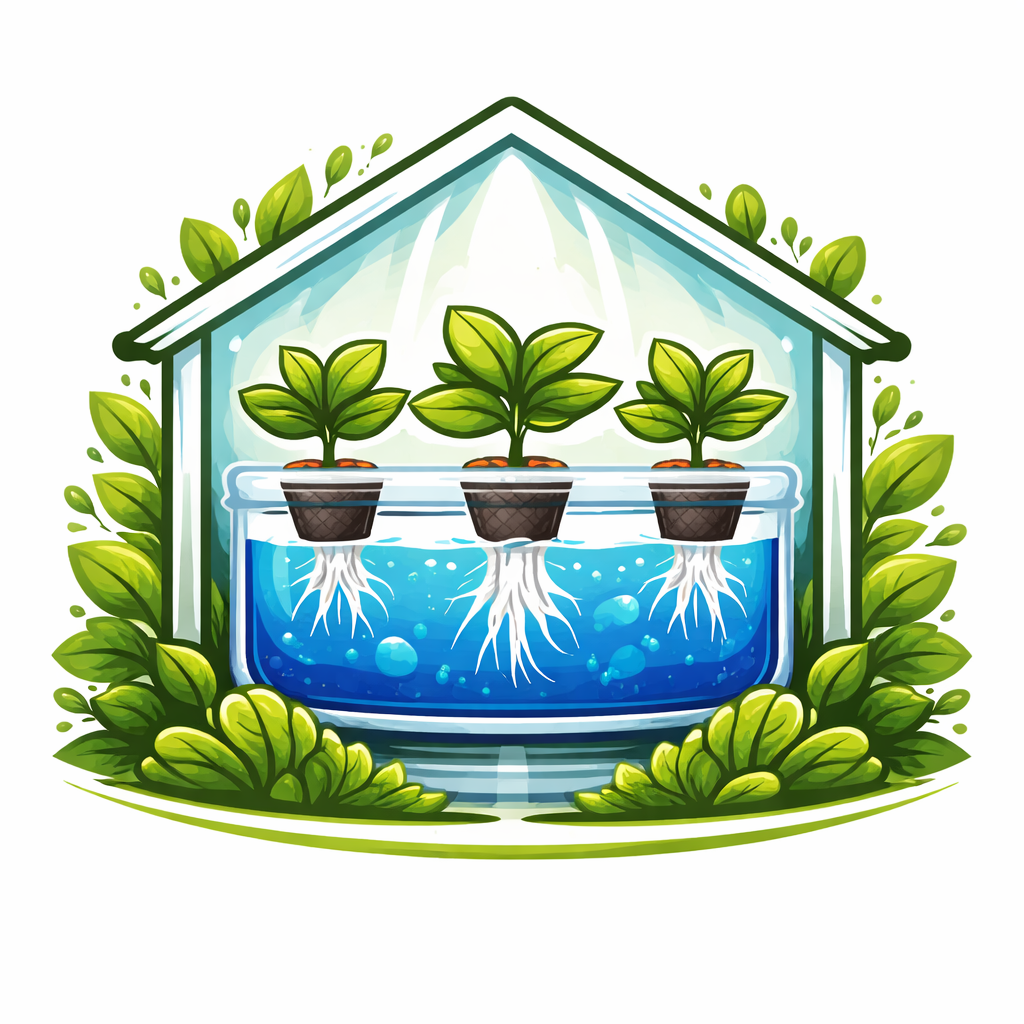

When you first start researching home hydroponics, three methods come up again and again: Deep Water Culture (DWC), the Kratky Method, and Nutrient Film Technique (NFT). All three work. All three can grow excellent food at home. But they suit very different growers, setups, and goals — and picking the wrong one for your situation can lead to frustration before you even get started.
Here’s a clear, honest comparison of all three to help you pick the right starting point.
Quick Comparison: DWC vs Kratky vs NFT
| Feature | DWC | Kratky | NFT |
|---|---|---|---|
| Difficulty | Easy | Easiest | Moderate |
| Cost to start | $30–$80 | Under $20 | $50–$150 |
| Electricity needed | Yes (air pump) | No | Yes (water pump) |
| Best plants | Lettuce, herbs, peppers | Lettuce, herbs | Lettuce, herbs |
| Maintenance | Low–Medium | Very Low | Medium |
| Failure risk | Low | Very Low | Medium (pump failure) |
Deep Water Culture (DWC): Best Active System for Beginners
In Deep Water Culture, plant roots are submerged in a reservoir of oxygenated, nutrient-rich water. An air pump bubbles oxygen through the solution continuously, preventing root rot and enabling rapid growth. DWC is the go-to beginner active system because it’s forgiving, cheap to set up, and produces impressive results even with basic equipment.
DWC is best for you if:
- You want to grow larger plants like tomatoes, peppers, or cucumbers
- You’re comfortable checking pH and nutrients every few days
- You have space for a 5-gallon bucket per plant
- You want a system that’s easy to expand
Kratky Method: Best Passive System — Start Here If You’re New
The Kratky Method is the simplest hydroponic system ever invented — no pumps, no timers, no electricity. Fill a mason jar with nutrient solution, place a seedling in a net pot, and let the plant drink the water down naturally. As the water level drops, an air gap forms that provides oxygen to the roots. That’s it. Most beginners who start with Kratky are harvesting fresh lettuce within a month.
Kratky is best for you if:
- You’ve never grown hydroponically before
- You want to spend under $20 to get started
- You’re growing leafy greens and herbs
- You want a nearly zero-maintenance system
- You don’t have a power outlet near your grow space
Nutrient Film Technique (NFT): Best for Scaling Up
NFT systems pump a continuous thin stream of nutrient solution over the bare roots of plants arranged in a sloped channel. The solution drains back into a reservoir and is recirculated continuously. NFT is highly efficient with water, scalable, and used widely in commercial operations — but it requires more upfront setup and carries a higher failure risk if the pump stops working.
NFT is best for you if:
- You’ve already tried Kratky or DWC and want to grow more plants
- You want to grow mostly leafy greens at volume
- You’re comfortable with building or assembling a channel system
- You have a backup pump in case of failure
Which Method Should You Start With?
For most absolute beginners, the recommendation is simple: start with Kratky. A mason jar, some rockwool, a bag of nutrients, and a small LED light is all you need. You’ll grow your first batch of lettuce in 3–4 weeks for under $30, learn how hydroponic nutrients and pH work, and have a clear foundation for stepping up to DWC or NFT later.
If you already have some gardening experience and want to grow more than leafy greens — especially fruiting plants like tomatoes or peppers — jump straight to Deep Water Culture. The equipment investment is still modest ($50–$80 for a starter kit) and the results can be spectacular.
Save NFT for when you’re ready to grow at scale — once you understand nutrient management, pH, and what your plants need, NFT’s efficiency makes it an excellent choice for producing large amounts of greens in a small footprint.