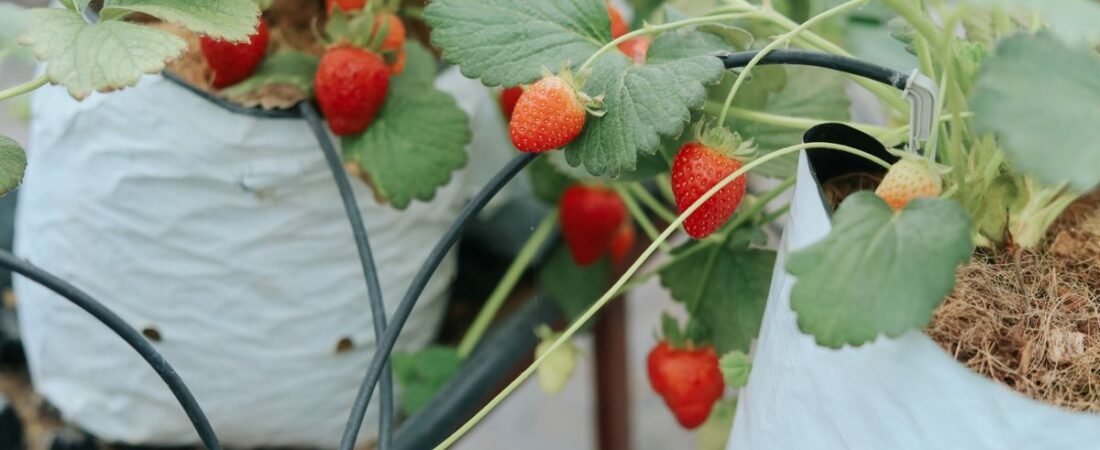
Few things rival the taste of a strawberry picked at peak ripeness. Growing strawberries hydroponically indoors lets you enjoy that flavor twelve months a year — no slugs, no mud, no waiting for spring. In this guide, I’ll cover everything you need to know about growing hydroponic strawberries at home.
Why Grow Strawberries Hydroponically?
- Year-round harvests — indoor conditions let strawberries fruit continuously instead of just one spring season.
- Cleaner fruit — no soil splash, no rot, no slugs.
- Sweeter berries — precise nutrient and pH control intensifies flavor.
- Space-efficient — vertical towers can hold 20+ plants in a few square feet.
Choosing the Right Strawberry Variety
Variety matters more than people realize. For indoor hydroponics, you want day-neutral or everbearing types because they fruit throughout the year regardless of day length.
- Albion — day-neutral, large sweet berries, disease-resistant.
- Seascape — heavy producer, tolerates warm indoor temps.
- Mara des Bois — wild-strawberry flavor, smaller berries, gourmet pick.
- Tristar — compact, perfect for small countertop systems.
Skip June-bearing varieties — they only fruit once a year and won’t take advantage of your indoor setup.
Best Hydroponic Systems for Strawberries
Strawberries have a relatively small root system but appreciate well-oxygenated water. The three best systems are:
- Deep Water Culture (DWC) with an air stone — simple, productive.
- Nutrient Film Technique (NFT) — excellent for growing several plants in a horizontal channel.
- Vertical towers — maximize yield per square foot, ideal for apartments.
Starting From Bare-Root Plants vs Seeds
Use bare-root crowns or runners, not seeds. Seeds take 6–12 months to fruit and rarely come true to type. Bare-root plants are widely available online and start producing berries within 8–10 weeks. Rinse all soil from the roots before transplanting into your net cups with clay pebbles or rockwool.
Nutrients, pH, and EC
- pH: 5.8–6.2 (slightly more acidic than lettuce).
- EC: 1.4–2.2 mS/cm — higher than leafy greens because of fruit production.
- Nutrient mix: use a “bloom” or fruiting formula with extra potassium and phosphorus once flowers appear.
- Water temperature: 65–72°F. Warmer water reduces oxygen and invites root rot.
Light and Pollination
Strawberries need 12–16 hours of strong light to fruit well. A 60–100W full-spectrum LED grow light is the sweet spot for a small setup. Because there are no bees indoors, you’ll need to hand-pollinate the flowers — gently brush each blossom with a small paintbrush or shake the plant daily once flowers open. Skipping this step leads to deformed berries.
From Flower to Fruit Timeline
- Week 1–2: transplant, root establishment.
- Week 3–6: leaf growth, runner pinching (remove runners to focus energy on fruit).
- Week 6–8: first flowers appear — hand-pollinate daily.
- Week 8–12: berries ripen, harvest, repeat.
Troubleshooting Strawberry Problems
- Small or deformed berries: poor pollination — brush flowers daily.
- Yellow leaves with green veins: iron deficiency — check pH (high pH locks out iron).
- Mold on fruit (gray mold): poor airflow — add a small oscillating fan.
- Few flowers: not enough light or wrong variety (June-bearing).
Gear We Recommend
Check our Amazon Products page for the indoor systems we’ve tested with strawberries, including kits with the right lighting power for fruiting plants.
Final Thoughts
Hydroponic strawberries do require slightly more attention than lettuce — but the payoff is enormous. A handful of plants can supply fresh berries weekly all year, with flavor that beats anything you can buy in a clamshell.