You don’t need a backyard, a balcony, or even a sunny windowsill to grow fresh food at home. With the right gear, and in some cases no gear at all, you can turn 2 feet of countertop, the corner of a closet, or the top of a bookshelf into a productive hydroponic garden. Quietly, cleanly, and without your landlord noticing.
This guide walks you through the two best apartment friendly systems (Kratky and DWC), plus exactly what to skip, what to spend on, and how to keep your neighbors happy.
Step 1: Find Your Square Foot
You only need about 1 to 2 square feet to grow a steady supply of greens for one person.
Look for spots that meet three criteria: a flat, water resistant surface, an outlet within 6 feet (only needed for the grow light), and a temperature that stays between 65 and 78°F year round. Good candidates include the corner of a kitchen counter, a low bookshelf, the inside of a closet, the top of a dresser, or under a desk.
Skip spots near radiators, drafty windows, or anywhere temperatures swing wildly.
Step 2: Solve the Light Problem
This is where apartments actually win, because you have full control over lighting and aren’t relying on the sun.
For a small setup, a single full spectrum LED grow light in the 20 to 40 watt range is plenty. Look for full spectrum white light (it looks like daylight, not the purple “blurple” lights that annoy roommates), a built in timer, a clip or stand mount, and minimal fan noise.
Run it 14 to 16 hours per day for leafy greens, positioned 6 to 12 inches above the canopy. Total cost: $25 to $60.
Step 3: Pick the Right System for Apartment Life
For small apartments, two systems blow everything else out of the water: Kratky and DWC. Both are silent, compact, and beginner proof.
Option 1: The Kratky Method (Zero Electricity, Zero Pumps)
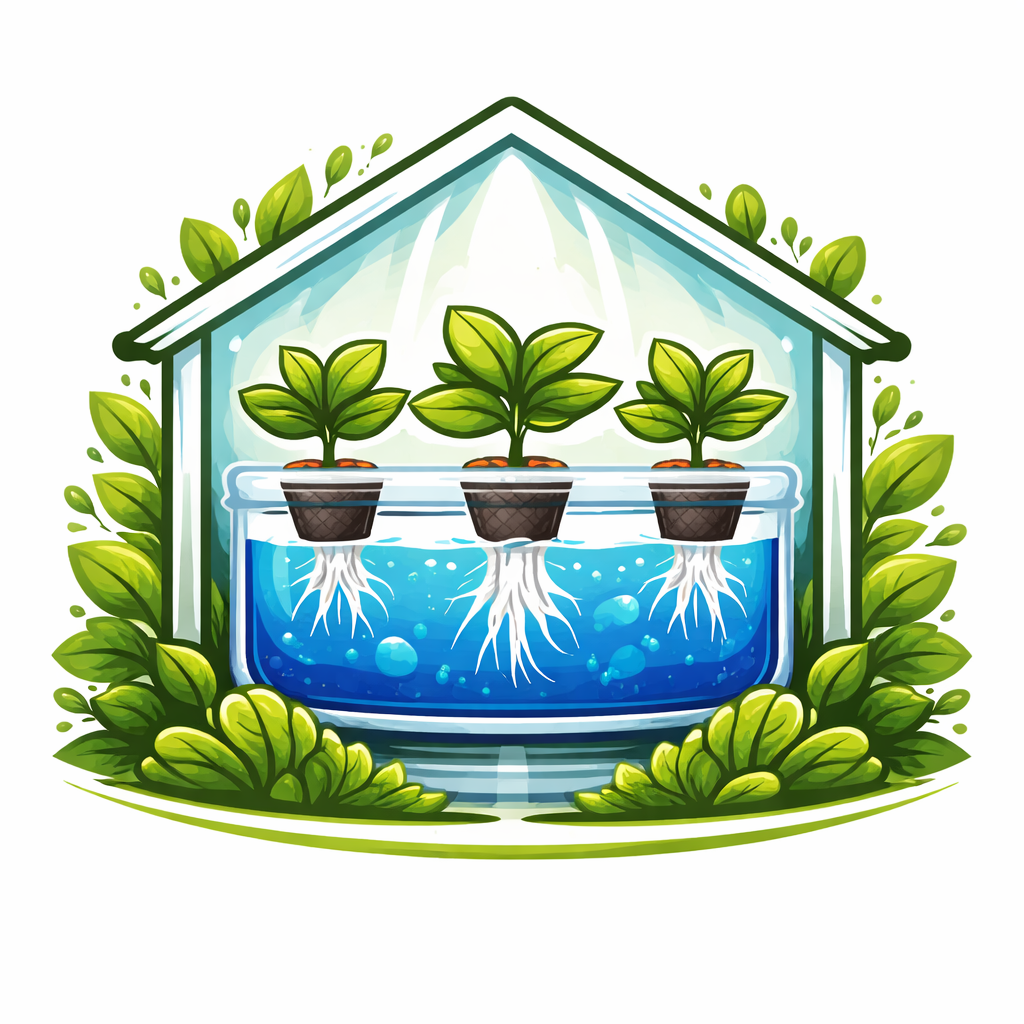
Kratky is the simplest hydroponic system on Earth. You fill a sealed container with nutrient solution, suspend a net pot with a seedling so its roots just touch the water, and walk away. As the plant drinks, the water level drops and exposes roots to air, which means the plant gets oxygen without any pump at all.
What you need: a mason jar or opaque container, a net pot lid, growing medium, hydroponic nutrients, seeds, and a grow light. That’s it.
Pros: completely silent, no electricity (besides the light), no moving parts to fail, takes up zero counter clutter, costs as little as $15 to $25 per jar.
Cons: one shot system. You don’t refill mid grow, so it’s best for short cycle plants like lettuce, basil, and bok choy. Not ideal for long cycle fruiting crops.
For most apartment dwellers, Kratky in a quart sized mason jar is the perfect entry point. You can have 3 or 4 jars lined up under one LED for the price of a single store bought herb pot.
Option 2: DWC (Deep Water Culture) for a Bigger Yield
DWC is Kratky’s slightly more productive cousin. The plant sits in a net pot above a reservoir, and an air pump with an air stone keeps the water oxygenated for the roots. No water pump needed, that’s a different system.
The air pump is small, runs on minimal electricity, and produces only a soft aquarium style bubble. Place it on a folded towel or foam pad and it virtually disappears.
What you need: a 5 gallon bucket or smaller opaque container, a net pot lid, growing medium, an aquarium grade air pump, an air stone, airline tubing, nutrients, and seeds.
Pros: faster growth than Kratky, holds enough water that you only top it up every 4 to 7 days, supports larger plants.
Cons: requires one outlet and a tiny bit of maintenance.
Cost: $30 to $60 for a DIY build.
Or Skip the DIY: Plug and Play Units
If you want appliance style aesthetics, brands like AeroGarden, Click & Grow, and iDOO sell countertop units in the $100 to $200 range with built in lights and pumps.
Step 4: Choose Plants That Thrive in Small Spaces
Stick to compact, fast growing crops:
Butterhead lettuce harvests in 30 days and is the gold standard Kratky plant. Basil grows tall but narrow and produces for months. Arugula matures in 21 days. Mint is nearly unkillable. Microgreens give you the highest yield per square inch of any crop and harvest in 7 to 14 days.
Save tomatoes, peppers, and cucumbers for larger setups. They need more root volume than a Kratky jar or small DWC can comfortably provide.
Step 5: Manage Noise, Smell, and Humidity
Noise: Kratky is silent. A DWC air pump runs around 35 to 40 dB (quieter than a fridge), and a foam pad reduces it further.
Smell: Leafy greens and herbs barely smell. Stagnant water is the bigger risk, so change your nutrient solution every 10 to 14 days in DWC, or just start a fresh Kratky jar after harvest.
Humidity: A single system won’t fog your windows. Scale up to several and crack a door or run a small fan.
Landlord Friendly Tips
Place a waterproof tray under every system. Use removable adhesive hooks for light mounts. Avoid running cords across walkways. Empty reservoirs into a bucket, and never pour nutrient solution down the sink in older buildings. Keep everything dismantle ready in under 15 minutes.
What It All Costs
A complete Kratky setup with light, jars, nutrients, and seeds: $45 to $90.
A complete DWC setup with light, pump, stone, bucket, nutrients, and seeds: $80 to $150.
Ongoing costs run $5 to $10 a month, less than one trip for store bought organic herbs.
FAQ
Do I really not need a pump for Kratky? Correct. The plant creates an air gap as it drinks, exposing roots to oxygen naturally.
Can I really grow without any natural light? Yes. LED grow lights provide everything plants need.
Will it raise my electric bill? A 30 watt LED running 16 hours a day costs roughly $1.50 to $2.50 per month. Kratky uses zero extra electricity beyond the light.
Is it safe in a rental? Yes, with a drip tray, secured cords, and no permanent modifications.
How much food will I actually grow? Four Kratky mason jars equals roughly two heads of butterhead lettuce per week, on rotation.
Your Next Step
Start with a single mason jar Kratky setup and a clip on grow light. It’s the cheapest, simplest, lowest stakes way to learn hydroponics, and once you’ve harvested your first head of lettuce, scaling up to DWC feels effortless.
Want a parts list? Check out our guides on building a DIY hydroponic system for under $50 and the best plants to grow hydroponically.