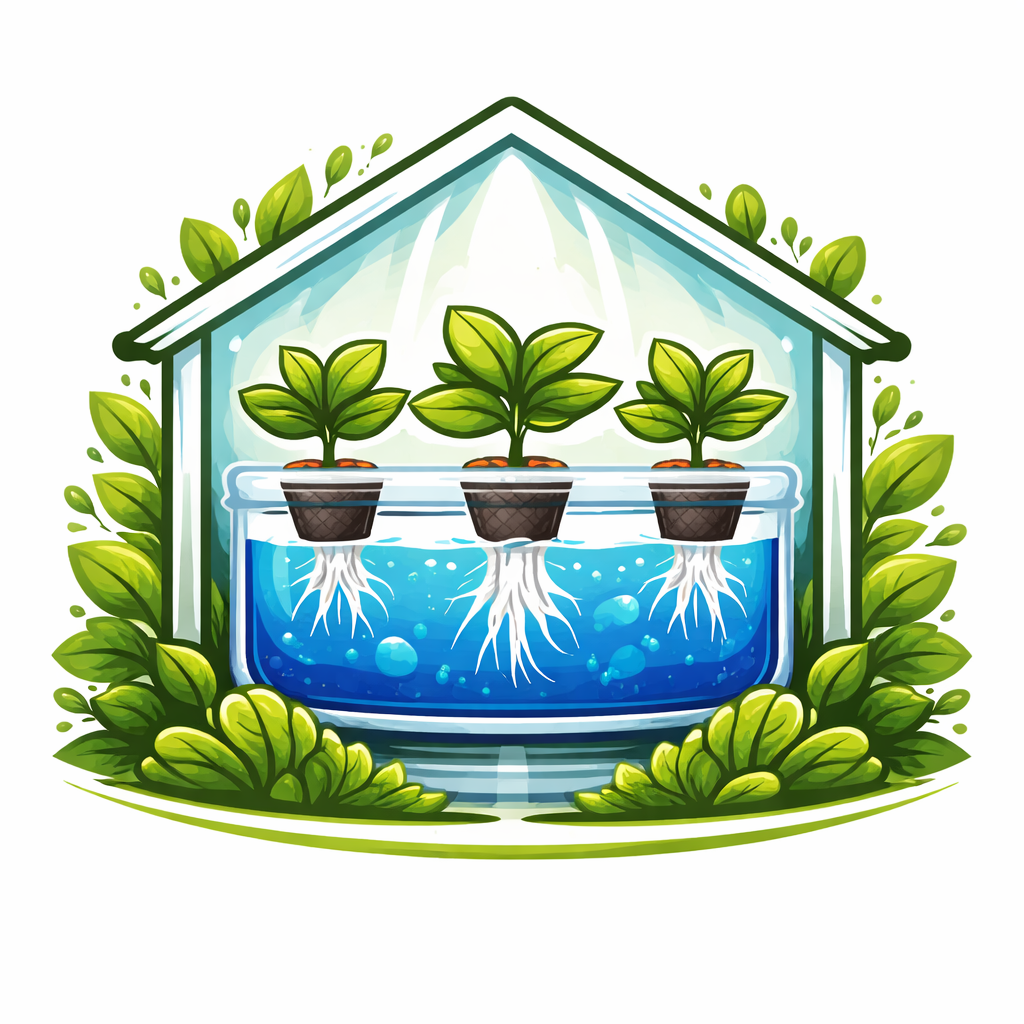
Nutrient Film Technique (NFT) Hydroponics
Nutrient Film Technique (NFT) is a highly efficient hydroponic method where a continuous, shallow stream of nutrient-rich water flows over the bare roots of plants. Widely used in commercial greenhouses and perfectly scalable for home growers, NFT delivers exceptional growth rates for leafy greens and herbs with minimal water use.
How Does NFT Hydroponics Work?
In a Nutrient Film Technique system, plants are placed in net pots or channels that sit in a slightly sloped growing tray or tube. A pump delivers a thin, continuous stream (or “film”) of nutrient solution from a reservoir at the bottom of the tray, up to the top, where it flows down across the roots of the plants and drains back into the reservoir to be recirculated.
The key feature of NFT is that the roots are only partially submerged. The bottom portion of the roots sits in the flowing nutrient film, while the upper portion is exposed to air — giving roots access to both nutrients and oxygen simultaneously. This dual access is what makes NFT so effective for rapid, healthy growth.
Because the nutrient solution is continuously recirculated, NFT systems use remarkably little water compared to soil gardens. The pump runs constantly (or on a timer), and the system requires only occasional top-ups and nutrient adjustments.
NFT vs. Deep Water Culture: What’s the Difference?
Both NFT and DWC are popular active hydroponic systems, but they work differently:
💧 Water Delivery
In DWC, plant roots are fully submerged in a static, aerated reservoir. In NFT, a thin film of water flows continuously over roots — they are never fully submerged.
🔧 System Complexity
DWC is simpler — just a bucket, air pump, and nutrients. NFT requires a sloped channel or tray, a water pump, tubing, and a reservoir — slightly more involved to build and maintain.
🌱 Best For
DWC excels at growing larger plants (tomatoes, cannabis, peppers) that need high oxygen and nutrient availability. NFT is ideal for fast-growing, lightweight plants like lettuce, spinach, kale, and herbs.
⚡ Power Dependency
NFT requires a continuously running pump — if the pump fails, roots can dry out within hours. DWC roots stay wet even if the air pump briefly fails, making it slightly more forgiving.
📏 Scalability
NFT is highly scalable — channels can be stacked vertically or extended horizontally, making it ideal for larger operations. DWC typically scales by adding more individual buckets.
What You Need for a Home NFT System
An NFT system can be built affordably with a few key components:
- NFT Channels or Grow Tubes — Flat-bottomed troughs or round tubes (PVC pipes work well) with holes cut for net pots. The channel should be sloped at 1-3cm per meter for proper drainage.
- Reservoir/Tank — A dark-colored container (10–50 liters for home systems) to hold the nutrient solution. Sized larger for more plants or less frequent top-ups.
- Submersible Water Pump — Delivers nutrient solution from the reservoir to the top of the channel. Choose flow rate based on your system size (typically 1-2 liters/minute per channel).
- Tubing and Fittings — Food-safe tubing connects the pump to the channels. Include a return pipe or gutter to drain back to the reservoir.
- Net Pots (Small) — 2-inch net pots work well for most NFT crops. Roots hang through the bottom into the nutrient film.
- Grow Lights — Full-spectrum LED grow lights for indoor growing. Position 18-24 inches above the canopy.
- Hydroponic Nutrients — Two- or three-part nutrient solutions designed for hydroponics (e.g., General Hydroponics, Masterblend).
- pH Meter and EC Meter — pH should stay between 5.5–6.5. Monitor EC (electrical conductivity) to track nutrient concentration.
- Timer (Optional) — For intermittent pumping; though many NFT systems run the pump continuously.
Best Plants to Grow with NFT
NFT is best suited for fast-growing, lightweight plants. Here’s what grows best in NFT systems:
🥬 Leafy Greens (Ideal)
Lettuce (butterhead, romaine, iceberg), spinach, arugula, kale, Swiss chard, and bok choy thrive in NFT. Expect harvests in 25-40 days. These are the most popular NFT crops worldwide.
🌿 Herbs (Excellent)
Basil, cilantro, parsley, dill, chives, mint, and watercress grow exceptionally well. Fresh hydroponic herbs have superior aroma and flavor compared to soil-grown varieties.
🌸 Edible Flowers
Nasturtiums, borage, and violas can be grown in NFT for gourmet garnishes.
🍓 Strawberries (Good)
Compact varieties of strawberries work well in NFT channels. They produce abundantly and the berries stay clean hanging out of the channels.
⚠️ Plants to Avoid in NFT
Heavy fruiting plants like tomatoes, cucumbers, and peppers are generally not recommended for NFT — their weight can crush or clog channels, and their high nutrient demands stress small NFT reservoirs. For these, DWC or Dutch Bucket systems are better choices.
Step-by-Step NFT System Setup
Follow these steps to build and run your first NFT system:
Step 1: Build or Buy Your Channels
Cut 2-3 inch holes in the top of your PVC pipes or NFT channels, spaced 6-8 inches apart. Mount them on a frame at a 1-2% slope (about 1cm of drop per meter of length) so water flows from inlet to outlet by gravity.
Step 2: Set Up the Reservoir and Pump
Place your reservoir below the channels. Connect the submersible pump to tubing that runs up to the high end of each channel. At the low end of the channel, add a return pipe that drains back into the reservoir. Test the flow — you want a thin stream, not a flood.
Step 3: Mix Your Nutrient Solution
Fill the reservoir with water and add nutrients according to the manufacturer’s instructions. For seedlings, target an EC of 0.8–1.2 mS/cm. For established plants, aim for 1.5–2.5 mS/cm. Adjust pH to 5.5–6.5.
Step 4: Start Seeds or Transplant Clones
Germinate seeds in rockwool cubes or rapid rooter plugs. Once seedlings have roots emerging (usually 7-14 days), place them in net pots in the NFT channels. The roots will quickly find the nutrient film and spread.
Step 5: Set Up Grow Lights
Position full-spectrum LED lights 18-24 inches above the channel tops. For leafy greens, use an 18-hour light / 6-hour dark cycle. Adjust light height as plants grow to maintain even coverage.
Step 6: Monitor and Maintain
Check pH and EC daily in the first two weeks. Top up the reservoir with plain water (not nutrient mix) when levels drop, as water evaporates but nutrients mostly stay in solution. Do a full reservoir change every 1-2 weeks. Keep the pump running 24/7 or on a short cycle timer to prevent roots from drying out.
Common NFT Mistakes to Avoid
- Too much or too little flow rate — Too much water floods the roots and removes oxygen; too little causes the film to run dry. Aim for 1-2 liters per minute per channel. Test with colored water before planting.
- Incorrect channel slope — Without sufficient slope, water pools rather than flows. Too steep and water rushes through too quickly for roots to absorb nutrients. Aim for 1-3% slope (1-3cm drop per meter).
- Pump failure without backup — NFT roots dry out in under 2 hours if the pump fails. Always have a backup pump on hand, and consider a battery-powered air pump as emergency insurance.
- Growing heavy fruiting plants — Tomatoes, cucumbers, and peppers are not suited for standard NFT channels. Their weight damages the system and their large root masses clog channels.
- Neglecting pH monitoring — In NFT systems, pH can shift quickly as plants consume nutrients and as water evaporates. Check pH at least every 2 days and correct promptly.
- Not cleaning between grows — Root debris and biofilm build up in channels between cycles. Flush and sterilize channels with diluted hydrogen peroxide or bleach solution between each grow to prevent disease.
- Overcrowding the channels — Plants need adequate spacing to receive even light and to allow root masses to develop without competing. Follow the recommended spacing for your crop.